Foster Care for Mental Health Treatment: Parents Surrender Thousands of Kids Each Year In Search of Help
The Imprint conducted a first-ever survey of all 50 states, asking how often parents voluntarily turn their kids over to the child welfare system. In an upcoming story, we’ll detail the wide variation in how states manage these “relinquishment” cases.
Sara Tiano reported this story while participating in the USC Annenberg Center for Health Journalism’s 2025 Data Fellowship.
BY SARA TIANO AND JORDAN ANDERSON
Lindsey worries constantly about her son. Not just typical parental angst, but darker fears: Will he hurt someone? Will he hurt himself? Is he headed for jail?
And then a thought the Georgia mother never could have imagined having when she adopted a toddler from foster care 11 years ago: How much longer will she legally be able to call him her son?
Lindsey and her husband Kris have poured themselves into their son’s care. He’s now 13, and diagnosed with reactive attachment disorder, ADHD, disruptive mood dysregulation disorder, anxiety and autism spectrum disorder. Kris changed jobs so he could work from home, and Lindsey uses extended time off to be present and manage demanding treatment schedules. The couple — who The Imprint is identifying by first name only to protect the identities of their children — has placed him in residential treatment multiple times before, only for each stint to end with inadequate discharge plans and a quick descent back into crisis. He’s been rejected by dozens of therapeutic programs because his behaviors are considered too challenging.
By last October, with yet another discharge date looming, Lindsey and Kris decided it wasn’t safe to bring him back into the family’s home in Evans. Lindsey warned the state’s child welfare agency that if she couldn’t get her son into a new placement, it would need to step in.
“My daughters are afraid,” she said. “That’s no way to live.”
‘Relinquishment’ by the numbers
Thousands of children in the throes of mental health crises are turned over by parents to foster care each year, according to a first-ever database of such “relinquishments” created by The Imprint. The problem, known to lawmakers and child welfare professionals for decades, has shattered biological and adoptive families, devastated kids and strained ill-equipped foster care systems. But it has never been comprehensively tracked, making it difficult to address.
To more fully document the scope, The Imprint sent questionnaires to child welfare agencies in all 50 states and Washington, D.C. asking about foster care relinquishment cases between 2014 and 2024, as well as how the cases were handled and what happened as a result. Relinquishment was defined as parents voluntarily surrendering custody who had not been accused of abuse or neglect.
Twenty-one states and Washington, D.C. responded with answers and data. The others failed to respond to repeated requests, or said they don’t track the cases. The final dataset, while certainly an undercount, showed that:
- Thousands of parents see no other option
Since 2014, more than 28,209 children have been voluntarily turned over to foster care by parents who report they cannot manage their children at home.
In five states that provided tallies by year, relinquishments declined over the 10-year period. But even with dwindling numbers in these states, in total, hundreds of children were relinquished each year in Minnesota, Georgia, Illinois, Pennsylvania and South Dakota. - Family life cut short
While parents may hope foster care is a temporary solution just to get treatment, relinquished children were more likely than other foster youth to remain in the child welfare system through young adulthood, and less likely to be adopted or enter a guardianship.
Only about half of relinquished youth reunified with their families. - Parent penalties vary
Six states — Alabama, Arkansas, Hawaii, Maine, New Jersey and Oklahoma — as well as Washington, D.C. reported charging parents with child abandonment in the family courts when they seek to transfer custody in search of treatment.
In contrast, in at least four other states, parents sign a “voluntary placement agreement” and collaborate with the child welfare system on plans for their children’s care and treatment. At least six states have specific pathways for relinquished children to enter foster care for mental health services. - Most children relinquished by biological caregivers
While previous media coverage of this issue has focused largely on adoptive families, The Imprint’s data found adopted children account for less than 8% of relinquishment cases across the country.
Bobby Cagle, a child welfare consultant and the former head of CPS agencies in Georgia and Los Angeles, is currently advising states on foster care issues, including relinquishment. He described The Imprint’s data collection as “extremely important.”
The problem “was vexing everywhere I worked,” Cagle said in an email.
Mike Leach, who led the South Carolina Department of Social Services until last year, joined Cagle in noting increased mental health needs among young people since the pandemic — and the sorely-lacking treatment options.
“When you see more than 28,000 kids entering foster care this way, some may say, ‘Well, that’s only 1% of the total 2.5 million kids who entered in that timeframe,” Leach said. “Using one of the costliest systems we have to solve problems — that could often be addressed earlier and more effectively in the community — is backwards.”

No idea what to do
Parents in Georgia, Minnesota and Idaho who spoke to Imprint reporters about relinquishing their children say it is a last-resort option. They do so believing that the foster care system is the only pathway for their children to receive the treatment they need to get better — and, if possible, to come home.
In a handful of states across the country, there has been a renewed focus on this relatively unknown group of foster youth and their families — including efforts to avoid relinquishments or stop penalizing parents who feel they have no alternative but to turn over their kids to the state.
Last year, after hearing from a mom who’d been charged with neglect for relinquishing her child to foster care, a Michigan Supreme Court justice called for a “no-fault pathway” for parents to avoid such penalties. Minnesota passed a law protecting parents from being accused of neglect in cases like that of Argie Manolis. Like the mom in the Michigan case, Manolis left her 15-year-old at a hospital, too scared to bring him back into a home with a young sibling.
Legislatures also took up the issue in Texas and Lindsey’s home state of Georgia, seeking solutions to keep families from getting to this crisis point.
While solutions are being sought, children and teens across the country still end up abandoned in psychiatric hospitals or emergency rooms when parents refuse to pick them up. Others end up committed to juvenile halls for behavior resulting from mental illness, even when they have not committed a crime.
WHILE PREVIOUS MEDIA COVERAGE OF THIS ISSUE HAS FOCUSED LARGELY ON ADOPTIVE FAMILIES, THE IMPRINT’S DATA FOUND ADOPTED CHILDREN ACCOUNT FOR LESS THAN 8% OF RELINQUISHMENT CASES ACROSS THE COUNTRY.
Minnesota mom Michelle Wood spoke about this at an April hearing before the state Legislature. Fighting tears, she described her daughter: funny, obsessed with ducks and cats, and deeply involved in their local 4-H program in rural Goodhue County.
But the child, adopted at 1, had deep struggles, too. Wood said she began having suicidal ideations in kindergarten, the start of a downward spiral. When she became violent, the family had to develop a safety plan. It involved her younger sibling locking himself in his room for protection when his sister erupted.
The girl cycled in and out of psychiatric hospitals and crisis centers. Before one discharge, Wood begged for more help — she knew it wasn’t safe for her daughter to come home. Hospital staff advised her to call 911 if the child got physical, she recounted.
“One day at school, she assaulted her best friend — and that’s exactly what happened,” she told lawmakers. “My daughter deserves better care than the justice system.”
Desperately reaching out — to CPS
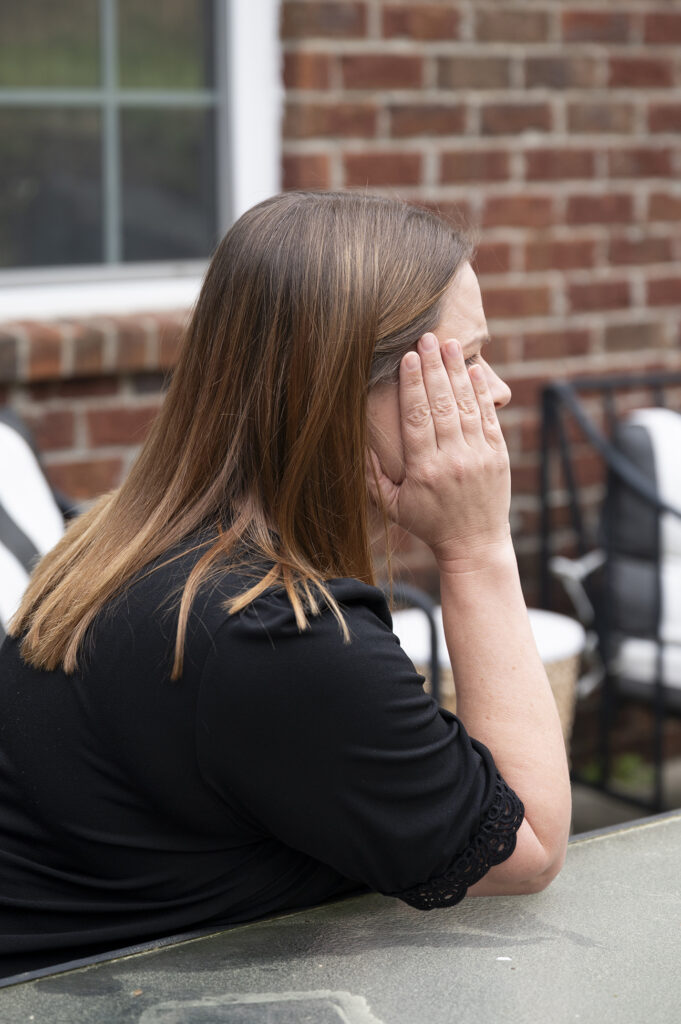
For Lindsey, seeking help from the child welfare system hasn’t been any better. Last summer, overwhelmed and desperate, she called CPS for help.
The responding social workers said relinquishment was one option, but they warned Lindsey that if she chose that path, she and Kris would have to go through a child protection case plan to try to get their son back. The couple was also informed they could be penalized for child abandonment, and would run the risk of losing their daughters to foster care as well.
Lindsey said based on her interactions with CPS, caseworkers are more familiar with addressing parents’ problematic behaviors. “But when the child is putting the family in danger — they have no idea what to do with that.”
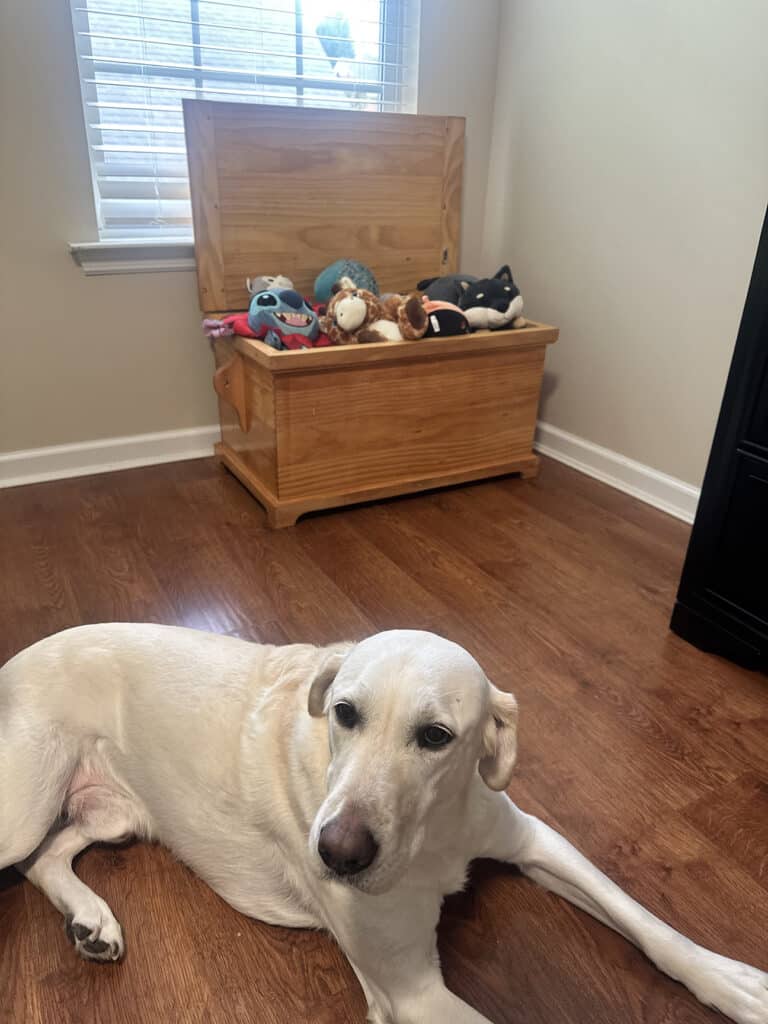
The couple were told to attend a parenting class — where they did receive some helpful information. “We’ve complied because we want to jump through all the hoops to get him the services he needs. We want to prove that we are attentive and we’re engaged,” she said. Still, she added, “I can go to parenting class every day, but that’s not going to help my kid. My kid needs intensive psychiatric care.”
In response to The Imprint’s survey, a spokesperson for Georgia’s Department of Human Services said “there is no difference” in how a case like this is handled compared to a typical abuse or neglect case. When parents relinquish, the Division of Family and Children Services maintains “the same rights and duties to a child as if the parental rights had been terminated by the court,” per agency policy.
Leach recalled that when he headed South Carolina’s Department of Social Services, two parents and their 13-year-old son approached him outside the office. The family was receiving services from the state’s Department of Developmental Disabilities, but needed more help. They’d just come from an emergency room seeking psychiatric help for the teen; hospital staff had instructed them to “turn him over” to CPS for residential care.
“Mom and Dad said: ‘We want to relinquish our son,’” Leach recounted, adding, “They were not neglectful or walking away. They were trying to get help.”
Leach’s staff was able to put some in-home intensive services in place, and the couple brought the teen home that day. Yet within weeks, he was back in a psychiatric crisis and surrendered to the foster care system.
Leach said that “without the right supports in place,” families like these must navigate multiple agencies to try to help children with complex needs such as autism and developmental disabilities in addition to mental illnesses.
“When those services aren’t available, families hit a wall. It puts caregivers in an impossible position and adds more trauma for kids who are already struggling,” he said. “It also points to a breakdown in the systems that are supposed to support families before things escalate.”
“USING ONE OF THE COSTLIEST SYSTEMS WE HAVE TO SOLVE PROBLEMS — THAT COULD OFTEN BE ADDRESSED EARLIER AND MORE EFFECTIVELY IN THE COMMUNITY — IS BACKWARDS.”
— MIKE LEACH, FORMER HEAD OF SOUTH CAROLINA SOCIAL SERVICES
So far, Lindsey and Kris are not among the thousands of people in this country who have relinquished their children. Between countless hours advocating for their son and applying for treatment programs on his behalf they’ve been able to delay such a drastic step. The state-sponsored health insurance he receives as an adoptee has been vital.
But the last-resort option remains ever-present in their minds.
Throughout several conversations over six months with The Imprint, Lindsey described deep love and empathy for her 13-year-old son, the middle child in the family. She said he shares her thirst for adventure. They love hiking together and exploring new places. Knowing he’s at his best immersed in such activities, the two recently took a trip to Disney World, beelining for the most intense roller coasters.

He’s funny, gregarious, and makes friends everywhere he goes, his mom said. That’s what he’s like when he’s “safe.”
But he can become violent in an instant, Lindsey added. He’ll throw things, smash glass bottles and hurl curses and threats. Repeatedly, he’s ended up strapped to a stretcher in an ambulance or in the back of a police car.
Lindsey described her son — who was not interviewed for this article — as wracked with distress about behaviors he can’t control. He has called the cops on himself, and tried to get sent to jail or committed to higher levels of treatment in order to feel more stable, she recounted.
This has gone on for the past two years, since he turned 11. But things got worse last year, Lindsey said, and she simply could not continue to subject her 10- and 16-year-old daughters to a home fraught with fear and harm. Her oldest daughter is her adopted son’s biological sister — and has her own emotional scars from foster care. Lindsey doesn’t want their home to be another source of trauma for her.
Twenty years of inaction; missing data
The federal Government Accountability Office first highlighted concerns about relinquishment in 2003. Congress had ordered an investigation after news articles in dozens of states uncovered parents “inappropriately placing” their children in foster care or youth justice custody to obtain treatment they couldn’t find elsewhere. It described these pathways as “two systems not designed to care for children solely because of their mental health needs.”
The ensuing report identified an estimated 12,700 impacted children in 2001 alone, a number described as an undercount. Fewer than half the states were able to provide data, but confirmed the practice occurred. Similar to the current causes of relinquishments, GAO investigators concluded that lack of access to appropriate mental health services was to blame.
“Because federal, state, and local agencies do not systematically track these children, the extent and outcomes of these placements are not fully known,” report author Cornelia Ashby wrote.
Today, the federal government has a “relinquishment” category in its Adoption and Foster Care Reporting and Analysis System. But its definition is broad, including newborns dropped off at fire stations, for example, and it does not include the many relinquishments categorized as child abandonment.
Last year, the U.S. Department of Health and Human Services released a report drafted by a private consulting firm that estimated the number of “custody relinquishments” of children in need of behavioral health or disability services. Without data reported by states, the researchers relied on existing foster care numbers and Medicaid claims. Using those, they found that between 2017 and 2019, as many as 5% of entries into foster care were due to relinquishment.
But they described their counts as estimates based on cases “resembling” relinquishment, noting: “We cannot assess how well these approaches identify actual custody relinquishment.”
Poor tracking of relinquishment for mental health care has left the highest-needs children and their families overlooked, said Stephanie Pasternak, who monitors and advocates for state-level mental health policies at the National Alliance on Mental Illness.
“Without that information, you kind of can’t get to the solution,” she said.
“THEY LOVED AND CARED ABOUT THEIR CHILD SO MUCH THAT THEY WOULD DO ANYTHING TO GET THEM HELP, INCLUDING RELINQUISHING CUSTODY.”
— GARY BLAU, SENIOR FELLOW, MEADOWS MENTAL HEALTH POLICY INSTITUTE
Gary Blau, a senior fellow at the Meadows Mental Health Policy Institute and former chief of the child, adolescent and family branch for the Substance Abuse and Mental Health Services Administration, said the federal government’s inability to track the issue is based in large part on differences in how states classify these foster care entries.
He said that while relinquishment cases are relatively small compared to the roughly 330,000 kids in foster care, more information is needed to help these families remain intact.
While trying to address this issue within the federal government, Blau met with the parents who had made this “heartwrenching decision.” Their stories drove him to keep pushing to innovate new solutions.
“They did everything they could to get their child help — this included,” he said. “They loved and cared about their child so much that they would do anything to get them help, including relinquishing custody.”
The Imprint’s findings on the scope of relinquishments
In response to The Imprint’s inquiry, 21 states and Washington, D.C. provided explanations of how they handle these cases, and tallied how frequent they are.
Most reported that these cases account for less than 2% of all foster care entries in their state; in many states it was less than 1%. Yet some states reported far higher rates. In Minnesota, more than 13% of foster care entries during the past decade have been deemed “placement for treatment,” a term unique to that state for cases like these.
Media coverage of this issue often centers on adoptive families like Lindsey’s, and as a result, policymakers often talk about reforming post-adoptive support as a solution. But The Imprint’s data showed that in the 21 states, adoptees made up roughly 8% of relinquished children.
States also reported about the outcomes for children who entered foster care this way.
Data from the states surveyed showed that 52% eventually returned home. Those who didn’t were less likely than other foster youth to be placed with a permanent family: One in five were either adopted or entered a legal guardianship, and roughly 16% aged out of foster care without permanency. The remainder fell into other outcome categories, such as transfer to a different agency, or they remained in foster care.
‘We love him very much’
Last fall, as Lindsey and Kris were on the brink of relinquishing custody of their son, a “miracle” placement came through: A rare facility in Missouri that accepts children with diagnoses of autism and reactive attachment disorder. For the next year, their son will receive specialized treatment that includes things like canine therapy — support Lindsey said had been lacking at poorer quality, in-state options they’d tried.
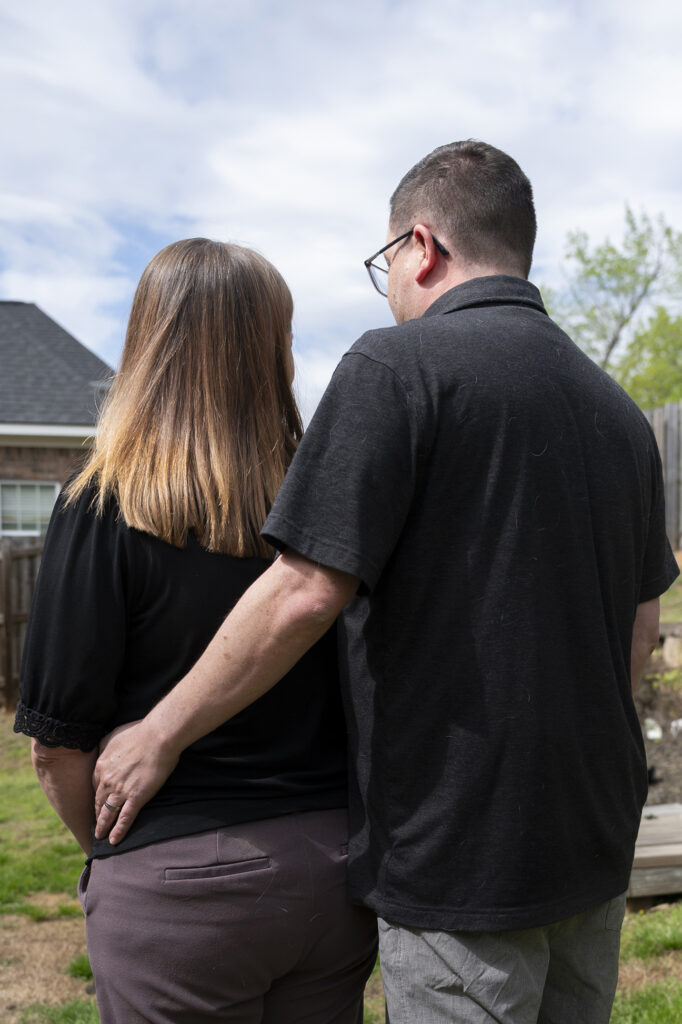
The annual cost of care at the facility is $300,000 and has been covered through special approval under the teen’s government-funded adoptee insurance plan.
While she’s grateful for this placement, she’s also furious that they had to send their son all the way to Missouri to find a treatment center equipped to handle his particular challenges — forcing her family to travel more than 800 miles to see him every few months. She feels betrayed by the social safety net — the schools, behavioral health department and child welfare system that she begged for help, receiving little in return beyond a list of therapy referrals.
And fear remains ever-present. Lindsey said she doesn’t see her son engaging with the new treatment yet or making progress toward healing. She wonders if he can. A therapist has warned the couple that it might take many years before his diagnoses can be safely managed.
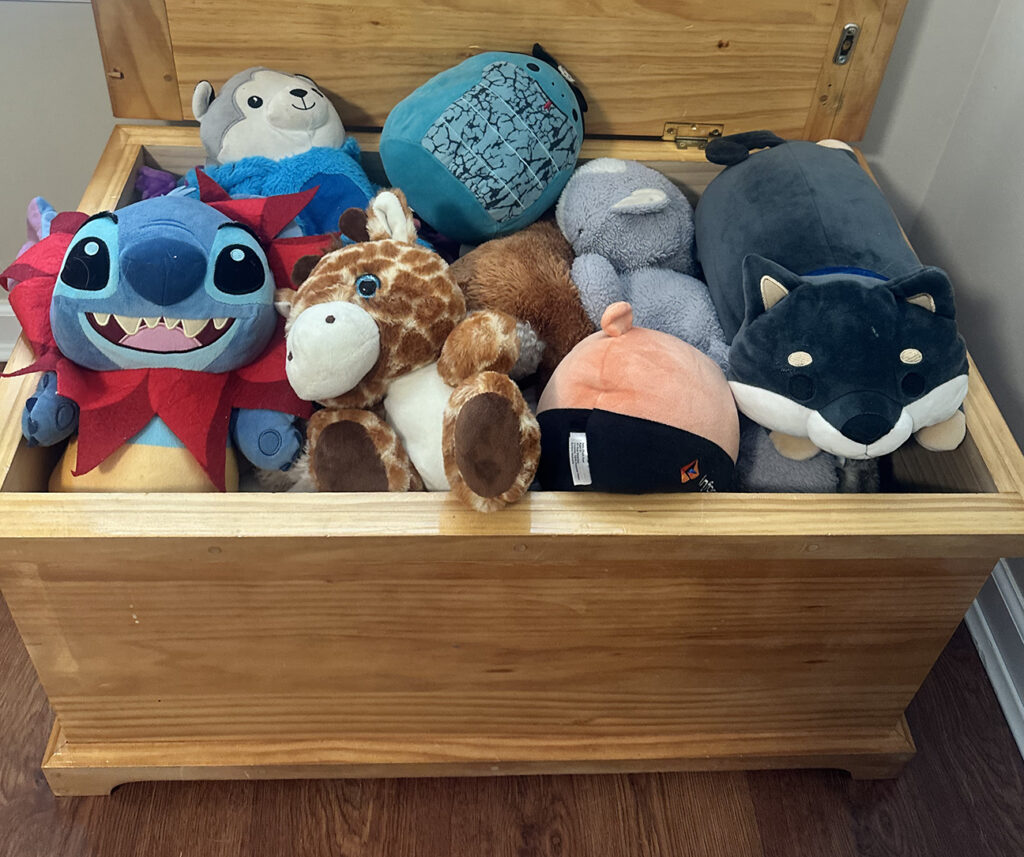
Unless he has at least six to eight months violence-free by the time the yearlong program ends in November, she and Kris say they may still give up custody.
“I’m terrified every day of that discharge date,” she said. “If they were to say he’s coming home tomorrow, I would say absolutely not. That is not safe for our family.”
If her son is eventually turned over to CPS, Lindsey said she desperately hopes it would be temporary. But she’s not sure that dream is realistic.
“We love him very much,” she said. “We have fought so hard, and we will continue to fight. I would love for him to receive treatment in a safe facility so that he can come home and we can be a family again.”
John Kelly and Jack Walker contributed to the data collection and analysis for this article.
This project was produced with support from The Fund for Investigative Journalism and the Nicholas B. Ottaway Foundation.
DO YOU HAVE A RELINQUISHMENT STORY YOU’D LIKE TO SHARE? ARE YOU A PROFESSIONAL SERVING THESE CHILDREN AND FAMILIES, OR A LAWMAKER WORKING ON SOLUTIONS? WE WANT TO HEAR FROM YOU. EMAIL STIANO@IMPRINTNEWS.ORG.