Resources
About
In December 2025, Think of Us launched a micro cash grant opportunity to support transition-age youth. The grant was designed to provide direct support to young people as they work toward stability, education, employment, and overall well-being. In addition to providing financial assistance, the grant also serves as a learning opportunity to better understand the needs and existing support systems of current and former foster youth. This information is used to inform advocacy efforts and promote system-level changes that more effectively support young people as they transition from foster care. The application asks about an applicant's current situation across several domains, the general and detailed needs they need support with, and open-ended questions about what they need and what they want us to know.
The Population
- Transitional Age youth (TAY)
- Ages 18–26
- Have current or former foster care experience
- Residing in Texas Region 7
The Why
The survey helps to show what transition-age youth actually need as they move from foster care into independent adulthood, often without the family safety net most young people can rely on. Understanding needs at this level of detail is how Think of Us and its partners can build support that meets youth where they are, rather than assuming what independence requires.
The Challenge
Transition-age youth often leave foster care without the financial resources, stable housing, transportation, or consistent support network needed to navigate adulthood. Even a single unexpected expense can disrupt their housing, employment, education, or well-being. Yet programs and policies do not always reflect how these needs overlap or what young people identify as most urgent.
The Action
Think of Us provided direct cash assistance to eligible transition-age youth in Texas Region 7. Through the grant application, which was open from December 15, 2025 - January 30, 2026, young people shared information about their current circumstances, support systems, and needs across areas such as housing, transportation, employment, education, and mental health.
What We Heard
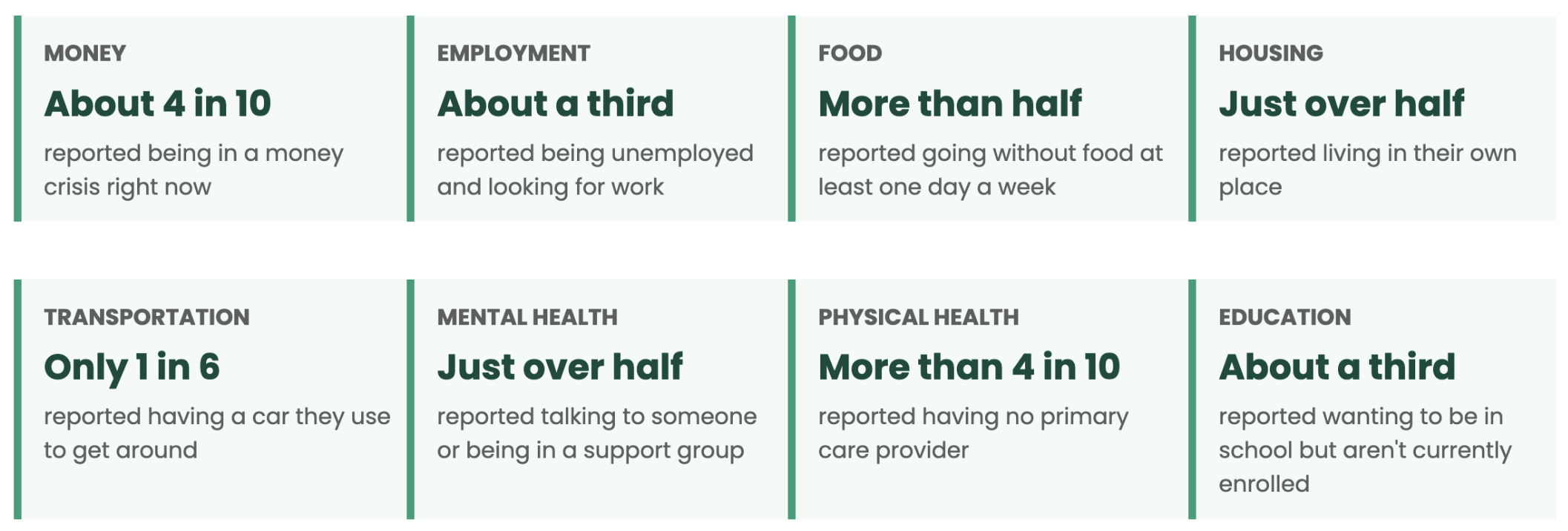
Quotes from applicants describing their circumstances today.
- Money - “I have been trying to catch up on some of my bills.”
- Housing - “Well right now I am trying to get a deposit so I can get off the streets.”
- Mental health - “My mental health is a battle and it doesn’t just get better because I aged out,” “I was in therapy from 6 years old until 18 and I never got the help I desperately needed”
- Transportation - “A car so I can have a stable place to sleep.”
- Family and support - “Everyone has someone to help them, but I do not. I only have me," “Transitioning into adulthood without a consistent support system has been challenging.”
The needs applicants named as their single top priority
- 28 named housing
- 23 named transportation
- 15 named employment
- 10 named clothing
Applicants were asked to identify one need as their single top priority.
Housing was the most common top priority need. Housing connects to nearly every other need — rent, utilities, and safety all depend on it. That overlap is likely why more applicants named it their single top priority than any other category.
Applicant needs by category
Ranked by number of applicants who reported needing support in that category, with their top requested need.
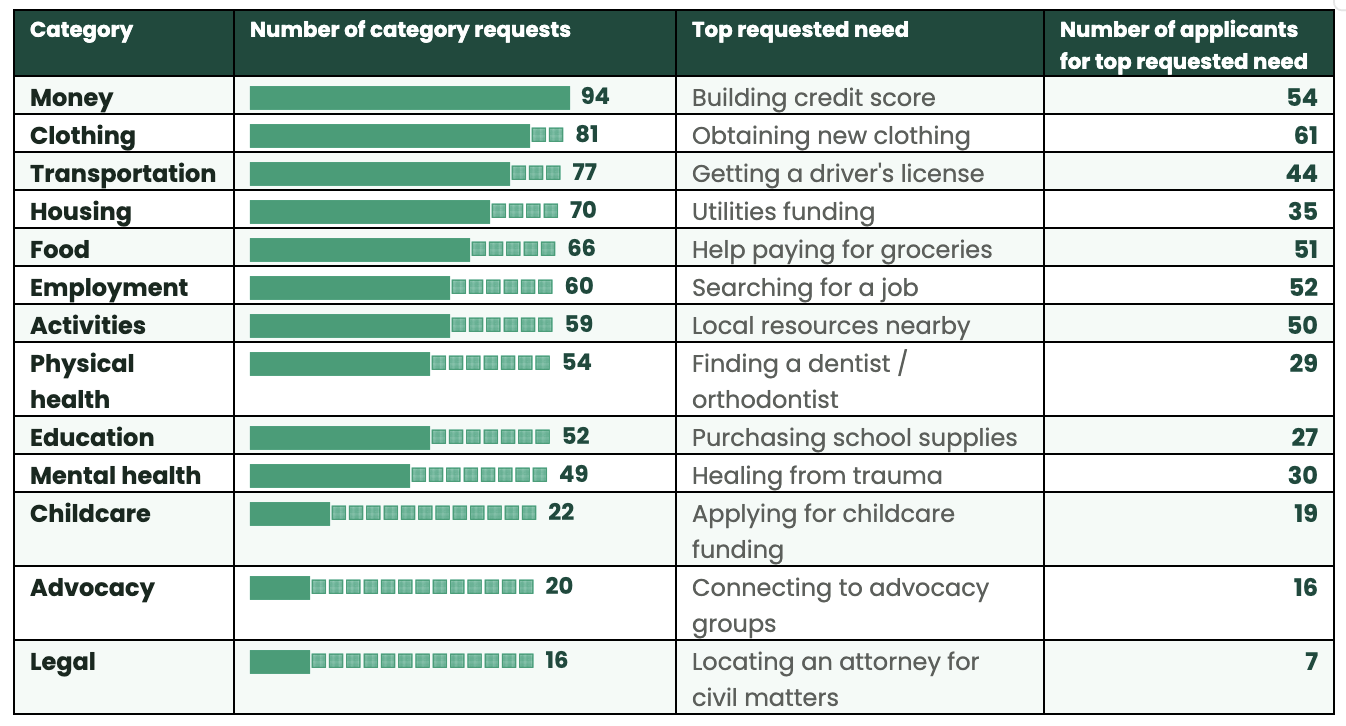
What we heard about their most pressing needs
Money
“We need financial support to cover the things we need so we don’t live paycheck to paycheck.”
“Getting a voucher for housing for my family or finding affordable housing.”
Housing
“Support with rent and utilities, especially during unexpected emergencies would make the biggest difference.”
“Getting a voucher for housing for my family or finding affordable housing.”
Transportation
“I would love to receive help with buying a vehicle before I start college.”
“Help me buy a car for work.”
Employment
“My biggest goal right now is looking for a job.”